5 Skills That Will Define Your Child's Future — And They're Not on Any Report Card

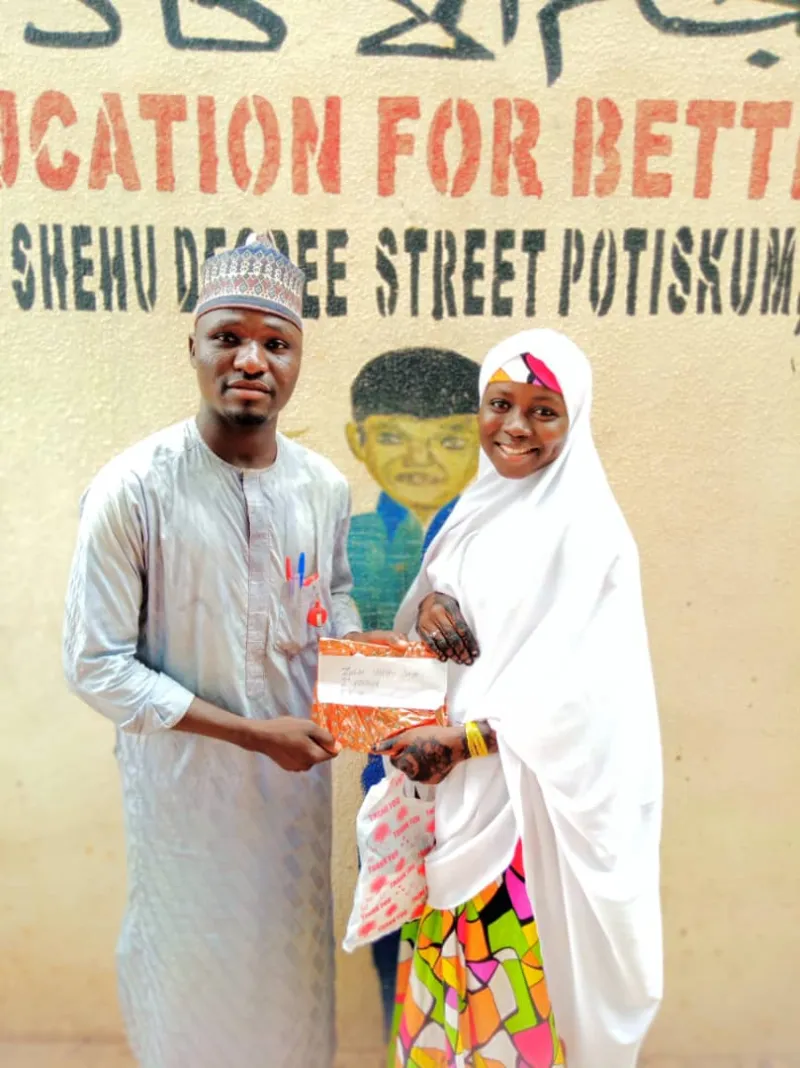
Photo: Ndhawan1, CC BY-SA 4.0, via Wikimedia Commons
The American job market is undergoing one of its most significant transformations in modern history. Automation is reshaping entire industries. Artificial intelligence is handling tasks that once required years of specialized training. And employers — from Fortune 500 companies to innovative startups — are increasingly vocal about what they need from the next generation of professionals.
Spoiler: it is not perfect standardized test scores.
A 2023 survey conducted by the National Association of Colleges and Employers (NACE) found that the competencies most sought by hiring managers include critical thinking, communication, teamwork, and professionalism — skills that are notoriously difficult to capture on a transcript. Meanwhile, the World Economic Forum projects that more than half of today's elementary school students will eventually work in job categories that do not yet exist.
In this environment, a holistic education — one that develops the whole student, not merely the test-taker — is no longer a luxury. It is a necessity. At Santhom School, this understanding shapes our approach to every program, every classroom, and every interaction we design for our students.
Here are five critical competencies that will define success in tomorrow's workforce, and how Santhom School is building them today.
1. Critical Thinking and Creative Problem-Solving
The ability to analyze information, question assumptions, and generate original solutions is consistently ranked as the top competency employers seek — and consistently identified as the skill most recent graduates lack.
"We don't just need people who can follow instructions," explains a talent development director at a leading Chicago-based consulting firm. "We need people who can look at a complicated, ambiguous situation and figure out what to do next."
Developing this capacity requires educational environments where students are regularly confronted with open-ended challenges — problems that do not have a single correct answer and that demand genuine intellectual engagement. At Santhom School, project-based learning units, Socratic seminars, and interdisciplinary coursework are designed specifically to cultivate this kind of thinking. Students are not simply asked to recall information; they are asked to do something meaningful with it.
2. Digital Literacy and Responsible Technology Use
In the modern workplace, digital literacy extends far beyond the ability to operate a spreadsheet or navigate social media. It encompasses the capacity to evaluate online information critically, collaborate across digital platforms, understand basic data principles, and use emerging technologies ethically and effectively.
Research from the Brookings Institution highlights a troubling gap: while most American students are heavy users of technology, far fewer demonstrate the analytical skills necessary to assess digital information with accuracy or discernment. The ability to distinguish reliable sources from misinformation — and to use digital tools as instruments of productivity rather than distraction — is a genuine competitive advantage.
Santhom School integrates digital literacy across the curriculum rather than treating it as a standalone subject. Students learn to conduct rigorous research, present findings using professional digital tools, and engage with technology in ways that are purposeful and informed. Responsible digital citizenship is treated not as an add-on, but as a core dimension of modern education.
3. Emotional Intelligence and Interpersonal Communication
Decades of research in organizational psychology have confirmed what thoughtful educators have long observed: people with high emotional intelligence — the ability to recognize, understand, and manage emotions in themselves and others — consistently outperform their peers in collaborative environments.
Dr. Marc Brackett, founding director of the Yale Center for Emotional Intelligence, has written extensively about the measurable impact of emotional skills on academic achievement, workplace performance, and personal well-being. His research demonstrates that students who develop emotional literacy are better equipped to handle conflict, build productive relationships, and sustain motivation through adversity.
At Santhom School, interpersonal communication and emotional awareness are woven into the fabric of student life — through advisory programs, collaborative projects, community service requirements, and a school culture that takes student well-being seriously. These are not soft skills in any dismissive sense of the term. They are foundational competencies for a complex world.
4. Adaptability and a Growth Mindset
Perhaps no quality will prove more valuable in the decades ahead than the capacity to adapt. Industries are evolving at a pace that makes rigid expertise increasingly fragile. The professionals who thrive will be those who approach new challenges with curiosity rather than anxiety — who understand that learning is a lifelong practice, not a phase of life that ends at graduation.
Psychologist Carol Dweck's landmark research on growth mindset — the belief that abilities can be developed through dedication and hard work — has reshaped how progressive educators think about student development. Her findings suggest that how students interpret failure and difficulty has a profound effect on their long-term achievement.
Santhom School actively cultivates this orientation by celebrating intellectual risk-taking, normalizing revision and iteration, and ensuring that assessment practices reward the process of learning, not merely its outcomes. Students who graduate from Santhom School understand that their education is a foundation, not a ceiling.
5. Collaborative Leadership and Civic Responsibility
The final competency on this list is perhaps the most expansive — and the most essential. The challenges facing American society and the broader world in the coming decades are too complex for any individual to solve alone. They require people who can lead collaboratively, listen across difference, and remain committed to the common good.
This is not merely an idealistic aspiration. Employers across sectors consistently report that the ability to work effectively in diverse teams, navigate disagreement productively, and take initiative without undermining colleagues is among the most valuable — and most difficult to find — qualities in new hires.
At Santhom School, leadership development is embedded in the student experience from the earliest grades. Student government, community service programs, peer mentorship opportunities, and collaborative capstone projects all serve to develop young people who are not simply prepared for their own careers, but for their roles as engaged citizens and community members.
Building More Than Academic Excellence
None of this is to suggest that academic rigor is unimportant. Santhom School holds its students to high standards across all disciplines, and our graduates are well-prepared for the demands of competitive colleges and universities throughout the United States.
But at Santhom School, we understand that academic excellence and human development are not competing priorities. They are complementary ones. The student who graduates with strong grades and the skills to navigate a complex, rapidly changing world is the student who is truly prepared for the future.
That is the education we are committed to providing — and it is the education every student deserves.