Between the Bells: What Unstructured Play Teaches That No Curriculum Can
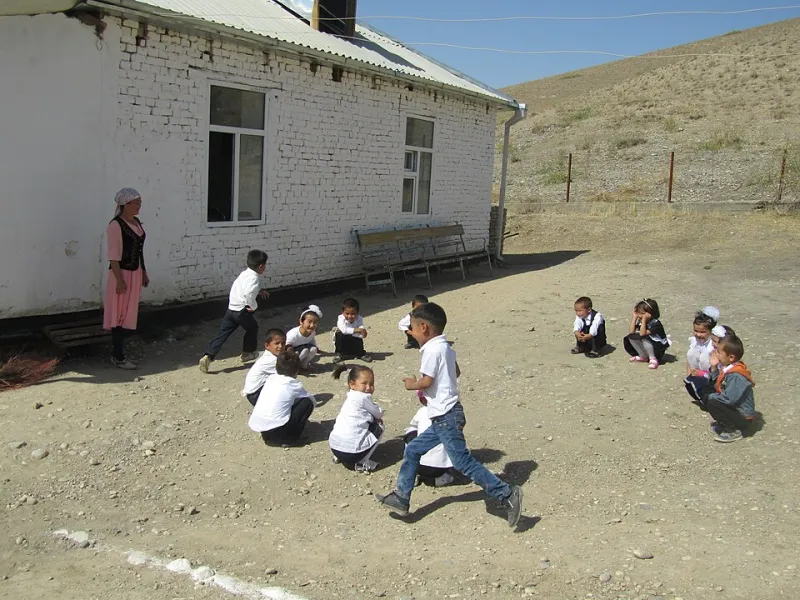
Photo: Nataev, CC BY-SA 4.0, via Wikimedia Commons
Walk past any elementary school in America at 10:15 on a Tuesday morning and you will hear it before you see it: the controlled chaos of recess. To an adult's ear, it sounds like noise. To a developmental psychologist, it sounds like a laboratory.
For years, the prevailing instinct in American education has been to shrink recess—to trade it for test prep, use it as leverage for behavior, or, in some districts, eliminate it altogether. That instinct, a growing body of research suggests, may be exactly backwards.
The Science Hiding in Plain Sight
The American Academy of Pediatrics has been unambiguous on this point: unstructured play is not a luxury but a necessity, essential to healthy cognitive, social, and emotional development. Dr. Sarah Whitfield, a child psychologist who consults with districts across the Midwest, puts it more plainly. "A playground at lunch is the densest social environment a child will navigate all day. There's no teacher assigning partners. No rubric. They have to figure it out—and that figuring-out is the skill."
What children practice in those twenty minutes—negotiating the rules of a game, recovering from exclusion, rallying a team, resolving a dispute without an adult referee—maps directly onto the competencies employers and universities later call collaboration, resilience, and leadership. The playground is, in effect, a rehearsal space for adulthood.
When Schools Take Recess Seriously
A handful of districts have begun treating recess as an instructional priority rather than an afterthought. Texas, Minnesota, and several other states have passed laws guaranteeing daily recess in elementary schools. Some districts have partnered with organizations like Playworks, which trains recess coaches to structure play without scripting it—the goal being more games, fewer conflicts, and no child left on the sidelines.
The results are measurable. Schools that protect and thoughtfully design recess time report fewer disciplinary referrals, smoother classroom transitions afterward, and, in several published studies, gains in reading and math achievement. The mechanism is not mysterious. Movement increases blood flow and attention; social play exercises the brain's executive function; and a child who returns to the classroom having successfully navigated a four-square dispute is a child ready to learn.
The Design Problem
There is a difference, educators caution, between merely allowing recess and doing it well. A cracked blacktop with a single ball and 200 children produces a predictable outcome: dominance hierarchies, exclusion, and conflict. The schools seeing the strongest outcomes tend to share three features.
First, they protect the time. Recess is never withheld as punishment, because doing so punishes exactly the children who need it most. Second, they train the adults. Playground monitors receive coaching in conflict facilitation—asking questions rather than issuing verdicts. Third, they offer loose parts and choice: jump ropes, chalk, building materials, quiet corners. Creativity, researchers have found, flourishes when children can invent the game rather than merely join one.
What Parents Can Do
The lessons of recess do not require a policy change to be useful at home. Ask your child not just what they learned today, but what they played. When they describe a conflict on the playground, resist the urge to solve it; ask what they tried instead. And when a school proposes cutting recess minutes to add instructional ones, ask the question the research demands: what evidence supports that trade?
The moments between the bells are not empty. They are, quite possibly, the fullest part of a child's day—and the schools that understand this are quietly teaching something no worksheet ever could.