The False Divide: Why American Education Can No Longer Afford to Choose Between STEM and the Arts
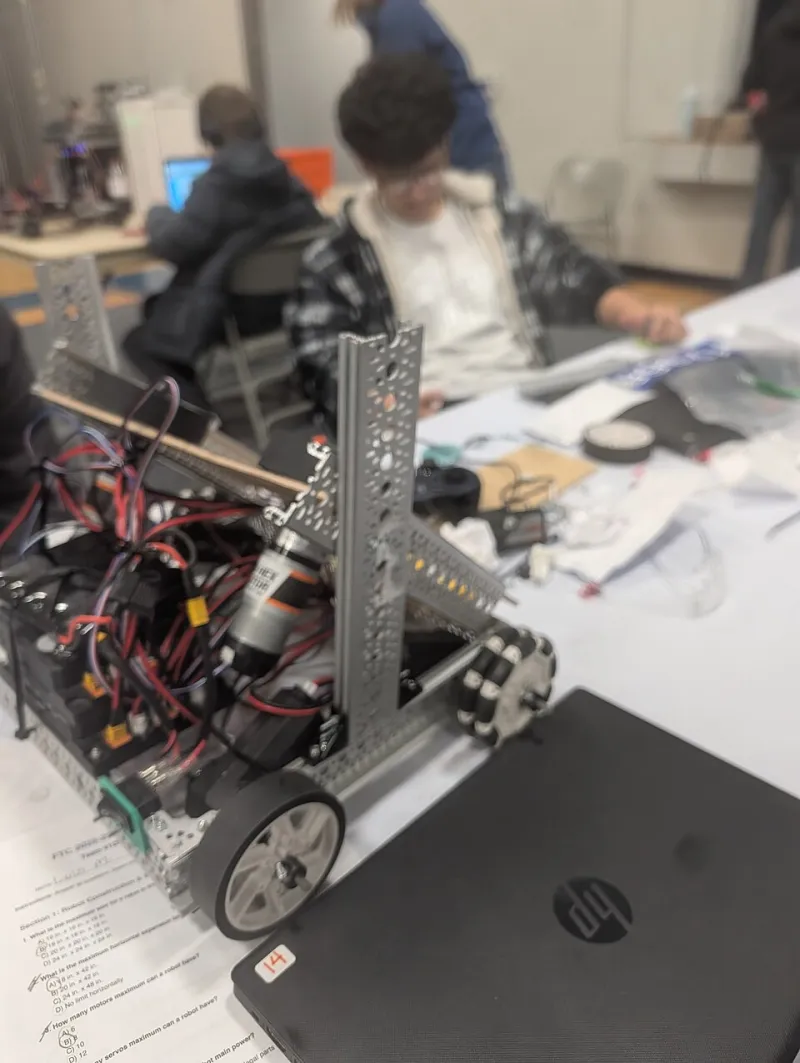
Photo: Bobjgalindo, CC BY 4.0, via Wikimedia Commons
Somewhere in an American school board meeting this month, a budget line was drawn between the robotics lab and the theater program. One was framed as an investment in the future; the other, as a nicety. This framing—STEM versus arts, rigor versus creativity, the engine versus the paint—is not just tired. In the age of artificial intelligence, it is actively harmful to the students it claims to serve.
A Dichotomy That Never Existed
The evidence against the either/or framing has been accumulating for decades. Studies of musical training consistently show strengthened spatial reasoning and pattern recognition. Visual arts instruction correlates with improved problem-solving flexibility. The engineers at the vanguard of American innovation are, as a group, strikingly likely to play instruments, paint, or write. The Nobel laureate Richard Feynman kept a sketchbook; the founder of a leading robotics firm will happily tell you that drama club taught her more about iteration than any coding bootcamp.
Yet the binary persists, because it makes budgets simpler and talking points punchier. Simplicity, however, is a poor foundation for preparing children for a world that refuses to be simple.
What AI Changes
Here is the uncomfortable truth now settling over the American labor market: the routine analytical work that STEM education has traditionally certified—calculation, pattern matching, standard problem-solving—is precisely what machines do fastest and cheapest. What machines do poorly, at least for now, is everything else: asking whether the right question is being asked, sensing what a user actually needs, imagining a product no one has yet described.
That is not a STEM skill. It is not an arts skill. It is both, fused.
Where the Blending Is Already Happening
The encouraging news is that the fusion is not theoretical. Consider a few models already at work in American schools:
- Robotics theater, in which students program machines to perform short plays—engineering constraints married to narrative craft.
- Mathematics through music, where fractions, ratios, and frequencies become audible rather than abstract.
- Data-driven art studios, where students learn statistics by interrogating the datasets behind visualizations they design themselves.
In each case, the arts are not a garnish on technical instruction, nor is the technology a gimmick decorating creative expression. Each discipline disciplines the other.
The Case We Should Be Making
The question before American educators is not whether to fund the lab or the stage. It is whether we will produce graduates who can execute—and we will, because machines increasingly can—or graduates who can originate. Origination has always required both fluency in a craft and the imagination to see past its current boundaries.
We should stop asking parents to choose which kind of child they are raising, and start building schools worthy of the whole one they actually have.